News Briefs for 2025
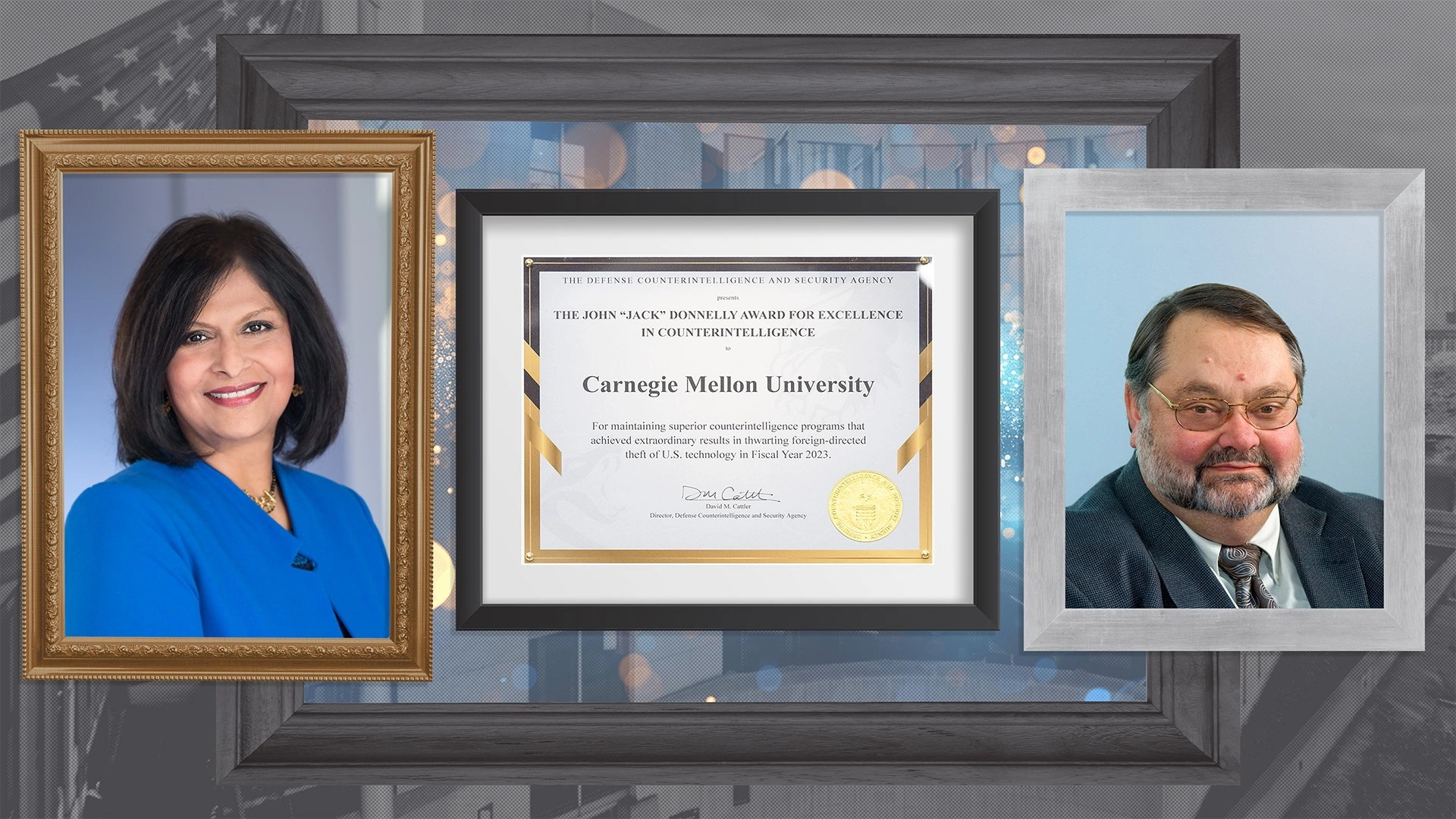
Carleton Named SEI Fellow
In December 2024, the SEI named Anita Carleton as its ninth SEI Fellow. The designation goes to leading SEI researchers and practitioners who have made an outstanding contribution to the work of the SEI and who continue to ensure the success of the institute’s mission.
Paul Nielsen, the SEI’s director and CEO, said, “Anita’s decades of research into software metrics and modern software engineering practices have become foundational for much of the software community.”
Carleton joined the SEI in its formative years and made fundamental contributions to development of modern software engineering lifecycle approaches, including the widely adopted Capability Maturity Model Integration (CMMI) and Team Software Process (TSP)/Personal Software Process (PSP), and SEI Core Measures.
More recently, Carleton was the primary driver of the influential study Architecting the Future of Software Engineering: A National Agenda for Software Engineering Research and Development, engaging the broader software engineering community in creating a multiyear research and development vision, strategy, and roadmap for engineering next-generation software-reliant systems.
“I am fortunate to have built my career at the SEI,” said Carleton, “and to have had the opportunity and platform to impact the discipline of software engineering worldwide.”
I am fortunate to have built my career at the SEI, and to have had the opportunity and platform to impact the discipline of software engineering worldwide.
Director, Software Solutions Division

SEI Awarded for Excellence in Counterintelligence
The Defense Counterintelligence and Security Agency (DCSA) presented the SEI with the Jack Donnelly Award for Excellence in Counterintelligence in December 2024. The annual award celebrates organizations that protect sensitive information and technology and deliver it to the Department of War (DoW). The SEI’s counterintelligence program extends to its operator, Carnegie Mellon University (CMU).
As Paul Nielsen, SEI director and CEO, said to an audience of SEI leadership and staff, DCSA leaders, and government counterintelligence officials at the award ceremony, “Sometimes security people, especially in counterintelligence, work behind the scenes. It's nice for them to get this recognition from DCSA and from us for the great work that they do.”
Adversaries of the United States are constantly seeking to gain advantage by accessing sensitive governmental information. SEI and CMU personnel work to counteract these efforts by reporting instances of suspected contacts by foreign intelligence, improving reporting analysis, and delivering counterintelligence education to SEI and CMU employees.
“CMU exemplifies the collaboration, creativity, and innovation needed today, while ensuring our national security for tomorrow,” DCSA deputy director Daniel Lecce told the audience prior to presenting the award.
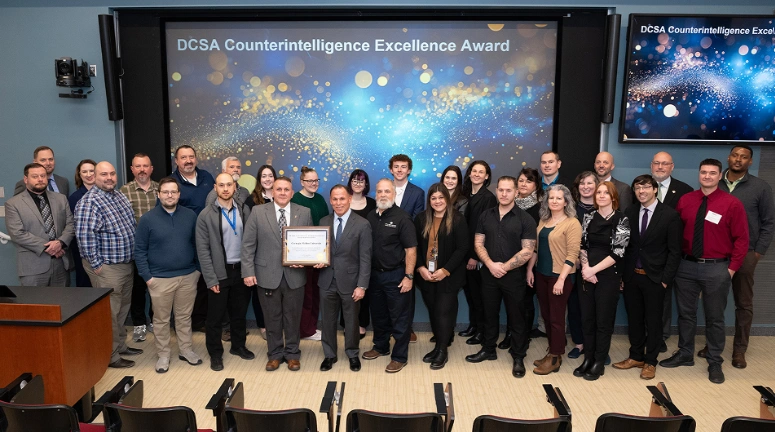
Jason Hawk, Carnegie Mellon University Software Engineering Institute's (CMU SEI) Director of Security, and Daniel Lecce, Defense Counterintelligence and Security Agency (DCSA) deputy director, hold the Jack Donnelly Award for Excellence in Counterintelligence while flanked by security and counterintelligence leaders from DCSA and CMU SEI. Photo: John Joyce, DCSA.
SEI Fellow, Founding CERT/CC Director Richard D. Pethia Inducted into FIRST Incident Response Hall of Fame
The Forum of Incident Response and Security Teams (FIRST) inducted SEI Fellow and former CERT Division director Richard D. Pethia into the Incident Response Hall of Fame in June 2025, at the global cybersecurity conference FIRSTCON25.
In 1988, Pethia founded the CERT Coordination Center (CERT/CC) as the first computer emergency response team, which played a vital role in establishing computer security incident response teams (CSIRTs) around the world. The CERT/CC also partnered with the Department of Homeland Security to stand up US-CERT.
Under Pethia’s leadership, the CERT/CC expanded its work into malware analysis, insider threat, risk and resilience management, and vulnerability research. It then became the SEI’s CERT Division, which leads research to fortify the cyber ecosystem and protect national security and prosperity. Pethia directed the CERT Division until 2016.
“Few people have had such a profound, positive effect on making the world a safer place,” said current CERT Division director and former U.S. federal CISO Greg Touhill.
“Creating the CERT Coordination Center was never about building a single team,” said Pethia. “It was about sparking a global community. Seeing how far that community has come is the greatest reward of all.”
Creating the CERT Coordination Center was never about building a single team. It was about sparking a global community. Seeing how far that community has come is the greatest reward of all.
SEI Fellow and former Director, CERT Division

A Renewed Contract with the Department of War
The U.S. Department of War (DoW) renewed its contract with Carnegie Mellon University to operate the SEI as a federally funded research and development center (FFRDC) in June of 2025. The contract for 2025-2030, with a five-year extension option, ensures that the institute will keep advancing and transitioning the science, technologies, and practices needed to make software a strategic advantage for the DoW.
The department established the SEI in 1984, and the institute began operation in early 1985. Since then, the SEI has been at the forefront of technology transformations that have changed how the Pentagon provides capabilities and protects its systems and networks.
Today, AI-enabled software systems, socio-technical systems, and quantum computing systems are shifting the technology landscape. Harnessing these transformations will require the SEI’s strength in integrating software engineering, cybersecurity, and AI Engineering for software quality.
“Carnegie Mellon University’s operation of the Software Engineering Institute advances pivotal research and development that is deeply consequential to our national security and defense,” said CMU President Farnam Jahanian. “Together, we will continue driving innovation, guiding defense strategy, and helping to secure the systems that power our economy, our security, and our way of life.”
Mentioned in this Article
Read More
Warfighter-AI Partnership: Beyond Humans in the Loop
SEI chief technology officer Tom Longstaff projects the steps needed for contextual AI to provide tactical warfighting advantage.